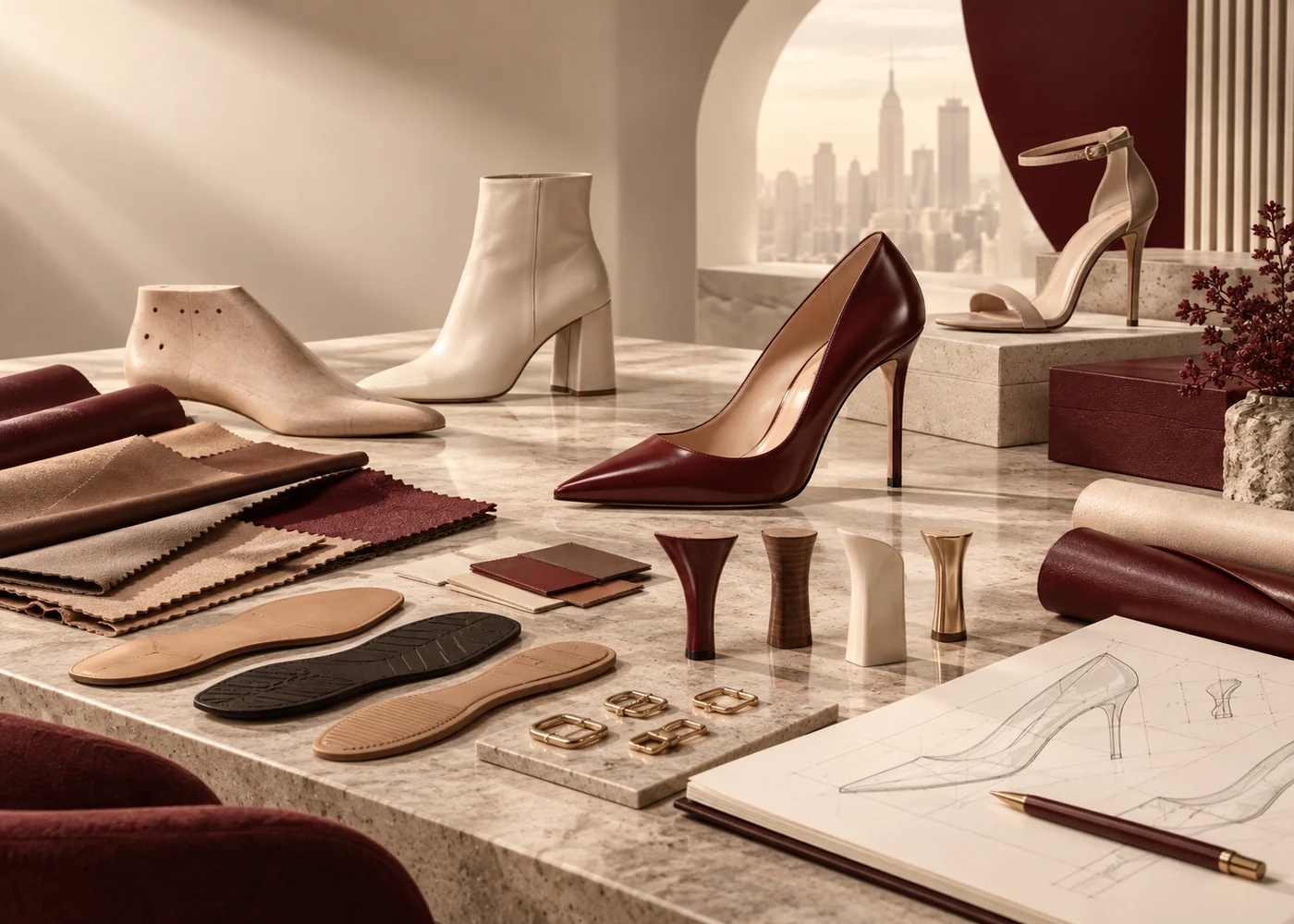
Finding a reliable women's shoe manufacturer is an important step in building a footwear brand or growing a wholesale business. Manufacturers vary in their expertise, customization capabilities, minimum order quantities, and quality standards. Choosing the wrong partner can lead to poor samples, production delays, and inconsistent product quality.
This article walks you through five practical steps to find, evaluate, and select the right women's footwear manufacturer for your business.
1. Define Your Footwear Project
Before contacting manufacturers, get clear on what you want to produce. Your shoe styles, target market, order volume, and customization needs will determine which factories are a good fit for your business.
Different women's shoe styles require different manufacturing expertise. Sandals demand careful attention to strap construction, sole design, and fit, while heels require proper balance, secure heel attachment, and well-designed shoe lasts. Flats typically place greater emphasis on flexibility, comfort, and consistent sizing.
Choose a manufacturer with proven experience in the specific styles you plan to sell. You can explore our women's sandals collection and consider other options, including heels, flats, and dress shoes, when planning your product line.
Before requesting quotes, establish your estimated order quantity, target price per pair, color options, and size range. Brands selling in the United States should specify US sizing requirements, while those targeting European markets should confirm EU sizing and actual shoe measurements.
You should also ask about the manufacturer's minimum order quantity (MOQ). Some factories calculate MOQ per style, while others have separate requirements for colors or size assortments. Clarifying these details early helps prevent unexpected production limitations.
Footwear brands generally have several manufacturing options. OEM manufacturing is suitable for brands with existing designs and detailed specifications. ODM manufacturing allows the factory to participate in product design and development, while private label manufacturing lets businesses sell footwear under their own brand name, logo, and packaging.
The right approach depends on your design resources, budget, and product development needs. For newer brands, customizing existing shoe styles may be a practical way to test the market before investing in fully original designs.
2. Find and Shortlist Manufacturers
Once you know what you need, start looking for manufacturers that specialize in your product category. Google, B2B sourcing platforms, footwear trade shows, and industry referrals are all useful starting points, but each requires careful evaluation.
Google can help you find women's shoe manufacturers with their own websites. Use specific search terms such as "custom women's shoe manufacturer," "private label women's shoes," or "women's sandal manufacturer" to narrow your results to factories with relevant experience.
When reviewing a manufacturer's website, look beyond product photos. Check its footwear collections, customization services, manufacturing processes, and factory information. If the website provides little information about production, ask for additional details before moving forward.
B2B platforms such as Alibaba, Made-in-China, and Global Sources make it easier to discover suppliers, compare product categories, and request initial quotes. Footwear trade shows offer another advantage: you can inspect physical samples and discuss materials, construction methods, and production requirements directly with suppliers.
However, platform badges and trade show displays do not necessarily confirm a company's manufacturing capabilities. Always verify where the shoes are produced, who manages production, and whether any manufacturing stages are outsourced.
Start with three to five manufacturers whose products, customization services, and production requirements match your needs. Compare their experience with women's footwear, sample development capabilities, MOQ policies, quality standards, and communication.
Use the following checklist to organize your initial evaluation.
- Relevant women’s footwear manufacturing experience
- Sample development and customization capabilities
- MOQ policy by style, color and size range
- Quality control process and clear communication
Once you have narrowed your options, send the same product requirements to each supplier. This makes it easier to compare quotes and identify meaningful differences between manufacturers.
3. Verify Factory and Development Capabilities
Finding potential suppliers is only the beginning. A reliable women's shoe manufacturer should have the right equipment, manufacturing experience, and development capabilities to turn your designs into consistent, production-ready footwear.
Start by checking the company's business registration, factory location, manufacturing facilities, and experience producing women's shoes. Request factory videos, production photos, relevant audit documents, or a virtual factory tour to better understand its operations.
You should also determine whether you're dealing with a direct manufacturer, a trading company, or a business that provides both services. Working with a trading company isn't necessarily a disadvantage, but you need to know who actually produces your shoes and who is responsible for quality, delivery, and after-sales support.
An experienced women's footwear manufacturer should understand the design and construction requirements of the styles it produces. For custom projects, confirm whether the factory can work from sketches, reference images, or technical specifications and adjust materials, colors, soles, heels, and branding details.
Our Women's Shoe Manufacturing Capabilities
We manufacture a range of women's footwear, including sandals, heels, flats, and dress shoes. Our OEM, ODM, and private label manufacturing services support fashion brands, wholesalers, and retailers looking to develop footwear tailored to their brand identity and target market.
Customization options include shoe designs, materials, colors, logos, and packaging. If you don't see the style you're looking for in our collection, share your sketches or reference images with our team. We can review your requirements and discuss suitable development and manufacturing options.
A manufacturer's production capacity should match both your initial order and your future business plans. Ask about sample development time, material sourcing, bulk production schedules, and the ability to handle repeat orders.
Custom soles, unique heels, specialty materials, and complex designs may require additional development time or tooling costs. Instead of relying on a general production estimate, request a timeline based on your specific shoe styles, quantities, and customization requirements.
A dependable manufacturer should be able to explain how it checks materials, monitors production, and inspects finished footwear. Ask about its quality control procedures, inspection records, and process for handling defective products.
If you plan to sell in the United States or Europe, confirm that the manufacturer understands the applicable product, material, labeling, and testing requirements. For example, footwear sold in the European Union may need to comply with relevant REACH chemical restrictions, depending on the materials used.

4. Inspect and Test Product Samples
Product samples are one of the best ways to evaluate a footwear manufacturer before placing a bulk order. Photos and catalogs can show a shoe's appearance, but they cannot fully demonstrate its fit, comfort, construction, or finishing quality.
Examine the upper materials, stitching, outsole attachment, heel construction, hardware, and overall finish. Look for uneven seams, excess adhesive, loose components, or visible defects that could affect the product's appearance or durability.
Inspection priorities should reflect the shoe style. For example, women's sandals require careful evaluation of strap placement and attachment points, while high heels need additional attention to heel stability and construction. These are also important considerations when reviewing styles from our women's footwear collections or discussing custom product requirements.
A shoe's fit depends on more than its labeled size. The last shape, toe box, width, insole, heel height, and overall construction all influence comfort and wearability.
Arrange fit testing with people who represent your target customers. For brands selling in the US or European markets, test multiple sizes instead of assuming that one sample represents the entire size range. Pay particular attention to foot support, pressure points, and heel stability when evaluating sandals and high heels.
Once a sample is approved, document the final materials, colors, shoe lasts, outsole specifications, sizing, logo placement, and packaging requirements. Keep an approved reference sample alongside the written product specifications so both parties have a clear standard for bulk production.
Any changes made after sample approval should be reviewed and confirmed before production begins. This helps reduce misunderstandings and lowers the risk of receiving shoes that differ from the approved design.

5. Compare Terms and Start with a Manageable Order
After evaluating the factory and its samples, review the commercial terms before making your final decision. The lowest quoted price does not always translate into the lowest overall cost, especially when quality, production reliability, and shipping responsibilities are considered.
Make sure you understand exactly what each quote includes. In addition to the price per pair, ask about sampling fees, tooling costs, branding, packaging, inspections, and any other charges associated with your order.
For international purchases, confirm the applicable shipping terms, such as EXW or FOB. These terms affect which party is responsible for certain costs, transportation arrangements, and risks. You can refer to the official ICC Incoterms 2020 rules for additional guidance.
Before placing an order, put all important agreements in writing. These should include product specifications, quantities, pricing, payment terms, production schedules, delivery arrangements, and quality acceptance standards.
For custom footwear, clarify who owns the original designs, molds, and other development assets. Written agreements also help establish how design changes, production delays, and quality disputes will be handled.
For a first-time manufacturing partnership, consider starting with a manageable order that meets the factory's MOQ requirements. This gives you an opportunity to evaluate product consistency, communication, delivery performance, and the manufacturer's response to unexpected issues.
Once the supplier has demonstrated reliable performance, you can gradually increase order volumes, introduce new designs, and expand your footwear collection with greater confidence.
Discuss Your Women’s Footwear Project
Looking for a reliable manufacturing partner for your women's footwear brand?
We provide OEM, ODM, and private label manufacturing services for women's sandals, heels, flats, dress shoes, and more. Our team works with brands, wholesalers, and retailers to explore footwear designs, materials, customization options, and production requirements.
Whether you have a complete design ready for development or are still exploring product ideas, share your sketches, reference images, estimated order quantities, and requirements with us. We'll help you discuss the next steps for your custom footwear project.
Ready to discuss your collection?
Share your sketches, reference images, estimated quantity and target market.
Frequently Asked Questions
Can I contact a shoe manufacturer without a full tech pack?
Yes. Some footwear manufacturers can begin discussions using sketches, reference images, and basic product specifications. However, detailed technical specifications are usually needed before producing fully custom shoe designs.
Can a factory make a sample from a photo or sketch?
Yes, some manufacturers can evaluate photos or sketches and use them as references for sample development. The final design will depend on construction requirements, material availability, technical feasibility, and relevant design rights.
Who owns custom shoe designs and molds?
Ownership depends on your manufacturing agreement and applicable intellectual property rights. Clarify mold ownership, design usage rights, and what happens to these assets if the partnership ends before paying development or tooling fees.
Can I add my logo and custom packaging?
Yes. Many women's shoe manufacturers offer custom logos, branded insoles, shoe boxes, and hangtags. Available options, minimum order quantities, and additional costs vary by manufacturer and product.
What if the first sample needs changes?
You can provide detailed feedback and request changes to the fit, materials, colors, construction, or overall design. Confirm the manufacturer's sample revision policy, additional fees, and expected turnaround time before beginning development.